T
There are 3 books output McGraw-Hill Education and all about middle school art program ; Introducing Art, Exploring Art, Understanding Art. each has been reprinted for many requests.
this book is great because of the fun way of delivering. Help them understand and appreciate other cultures, and encourage them to think more creatively and solve problems more effectively.
Exploring Art, Student Edition 3rd Edition, contains introducing art with media approach, painting, sculpture, etc. and media used.
more details please see here
Showing posts with label literature. Show all posts
Sunday, November 5, 2017
Saturday, November 4, 2017
Living With Art by Mark Getlein
In this book students are given understanding to be able to analyze the art. The tools for analyzing are also explained here, coupled with historical knowledge and influences. Make it analysis tool more rich and original.
Taken together, all of these elements help students to better appreciate art as a reflection of the human experience and to realize that living with art is living with ourselves.
"Throughout the previous seven editions, this text has earned a reputation for elegance and the highest standards of quality. Living with Art helps students develop an appreciation of art by offering a clear and comprehensive introduction to the visual arts from several perspectives: themes and purposes of art; the vocabulary of art; individual art media (painting, drawing, camera arts, sculpture, architecture, etc.); and the history of art. The book is rich with illustrations drawn from a wide range of artistic cultures and time periods" www.goodreads.com
read here or download
Glencoe Introducing Art Student Edition
This book is designed to introduce art to school students. So if you want to know the art more deeply not this book you are looking for.
But what I saw was not so. the book is built by a variety of good skills on art theory as well as art practice. this book also makes the reader excited because in between the discussion inserted biographical artists close to the subject. artist quotes are sometimes discussed.
in addition to discussing the theory in this book also in the present practice of art at the end of the discussion. this is so interesting.
you can read and download here
Monday, October 30, 2017
The Illustrated Encyclopedia of Weaponry by Chuck Wills.
This book explains the history of weapons from time to time, with illustrations accompanied by clear descriptions we are invited to wade through time to get to know various weapons. What, why guns are created, over time and knowledge of weapons are changing.
"Weapons have a unique appeal for collectors and museums because of their technology, materials, craftsmanship, and beauty. The most ordinary weapons tell the story of the time and the society in which they were made and used. Though they served and continue to serve deadly purposes, weapons allow a glimpse into human history" ROBERT LINDLEY
Monday, October 23, 2017
The Fundamental os Illustration , Lawrence Zeegen/ Chrush
'The Fundamental of Illustration' is intented as a comprehensive guide for illustrators, designers and those who commission illustration. Investigating the generation of ideas, interpretation of the brief, analogue and digital working methods, and the art selfpromotion through example of contemporary practice, this book offers a unique resource and insight into illustration.
can read here after 'skip add'
Monday, September 25, 2017
The Time of a Repetition by Miguel de Beistegui
Philosophy's fundamental and only constitutive question is that of being of beings, and of the decisive yet unrecognized difference between being and beings. If being is not in the way of a being then what is its mode of being? to what extent can we say that being is?
read more or download here
Nietzsche's Revolution Décadence, Politics, and Sexuality
This book claims Nietzsche as a leftist revolutionary but without overlooking the conservative and retrogressive elements of his political philosophy. The author argues that these two 'halves' of his philosophy help construct a new form of politics for contemporary readers, a possibility of revolution post-Marx.
Here to read or download it
Saturday, September 23, 2017
Typography Workbook
There is an elegance to letters and words I appreciate. The shape of individual letters and the way they fit together beautifully, when set properly, is noticeably better than slap-dash text thrown down with little care.
This book covers the fundamentals of dealing with type and shows how it is best used in graphic design. It includes detail on the general mechanics of typography, such as the dos and don’ts of typesetting, alignment, kerning, leading, information on optimal line length for legibility, etc. There are numerous examples illustrating the information discussed plus graphic design styles from around the world too.
The Typography Workbook was a good refresher for me, an experienced designer, but it would also prove helpful to those just starting out, as well. I found this book informative and educational but especially loved the fun layout! That, in and of itself, was useful to me. I was surprised by the high volume of graphic design samples. They took up half the book and, though interesting to look at, not all seem to pertain to typography.
it can read here
Thursday, September 14, 2017
The Human Machine by George B Bridgman
What is the difference between art anatomy and Bridgman's concept of the human machine? The human machine is the body as not only a fixed framework but also as a complex work of art which moves and was designed to move.
In over 400 drawings, George B. Bridgman demonstrates the machine through the presentations which made him a gifted lecturer and teacher in his nearly fifty years at the Art Students League in New York and which gave life to drawings by his many students during those years. All skeletal and muscular systems are fully identified, and all are shown in front, back, and side views.
Perspective: A Guide for Artists, Architects and Designers by Gwen White
This book started so well. I had wide eyes and high hopes like "yes, finally, I will learn and understand perspective, goddamn!" and I read it so attentively.
And then. Then I am not even sure what changed, suddenly it was more like a college book for architects and designers and I fell into despair. This book failed me too, like the previous one, I was not able to learn perspective. Maybe I'm too stupid but I'll have to find another book. The book itself has lots of drawings and I actually think it could be really good for someone who has an instructor or a bit of background knowledge ( or more of a mathematical brain then I do)
Conceptual Art: A Critical Anthology
This anthology is a very good collection of some of the more pertinent writings (and some examples) of conceptual art.
What struck me is that most of the writings from the artists who began the "movement" (and if there is one thing this collection makes clear, it's that it is impossible to speak of conceptual art as a "movement" in any sort of easy, art-historical terms) in the mid to late 1960s reflect their each artist's own concerns with the commodity status of art and the gallery system (or the sense of stagnation in art circles of that time). However, most of those writing are entirely incoherent to someone entering them (like me) from the outside. I was much more impressed by the work that began to appear in the 1970s that sought to seriously theorize what was going on and what the various social and economic problems were that these artists were wanting to take on, change, or avoid. Much of t his work is theorized in Marxist form (though some do use some of the continental structuralist and poststructuralist theories that would make up "postmodernism"), and much of that theoretical work is very impressive indeed. The best of it, paradoxically, shows how weak how much of a failure much of the work of conceptual artists actually was (such as the work of Adrian Piper and Benjamin H. D. Buchloe). Most of the "theory" put forth by Art and Language (in either its British or New York collectives) is terrible, Stalinist crap, including most everything included here by Joseph Kosuth (who, early on and especially by the 1980s and 1990s, seemed much more interested in settling personal scores than in theorizing about art or the art system more generally).
What is missing from this anthology is more of the contemporary voices from the 1960s and 1970s who were not very impressed by conceptual art (there is one article from the time in this category and one retrospective account published here). Otherwise, this is a very deep and interesting collection that illuminates the complexities of the situation(s) around conceptual art both at the time and in various forms of retrospection
Saturday, August 19, 2017
Rumi The Masnavi
Jawid Mojaddedi is known world-wide as a Rumi expert. He has published several books, including translations of Rumi's longest poem, known as the Masnavi, into simple English. The Masnavi: Book One was published in 2004 and was awarded the Lois Roth Prize for excellence in translation of Persian literature by the American Institute of Iranian Studies. The Masnavi: Book Two was published in 2007. - Wikipedia
Read and download here after skip add.
Friday, July 28, 2017
Loneliness as a Way of Life by Thomas Dumm
"While loneliness is close to being a universal experience of human life, for many reasons it is not easy to describe. However, certain generally accepted truths concerning the human condition might serve as guideposts for discussion. For instance, we may note that to be human is to risk being alone in a way that is unbidden and unwanted. And we may also note that while we are alive, we humans search for what we imagine our world to be. It is true that from the start of our lives and for our lives' duration, we seek others to comfort us, harm us, ignore us, and move us onto our paths through and out of life. Loneliness is deeply entangled in all paths of life because it reveals in sharp profile some of the most important limits of who we are and how we are with each other. It may be said that loneliness is fundamental to the very constitution of our selves." page 26
read the book here after skip add
The Murder of Vincent van Gogh
This is story about Vincent van Gogh, but it is not historical biography. What you will read is a tribute to Vincent van Gogh: a book that invents character and situations that reach beyond reality to express what might have been Vincent van Gogh's inner experience on his unique life-journey.
Here the story after skip ad button.
Thursday, July 27, 2017
Sunstone by Octavio Paz
a poet book from Octavio Paz. Who is Octavio Paz?
He is a Mexican poet and diplomat. It would be wise if you look on the wiki, it's all enough to expose him a bit..
the poet you can read here after skip ad on the top right button.
Monday, July 17, 2017
beyond Hegel and Nietzsche by Elliot L. Jurist
This book is very heavy, try to read more calmly and without emotion, because the two figures are very hard in writing. Elliot L. Jurist tries to manifest both figures whether or not a philosopher can still be called? In this day and age. Can be read here!
Thursday, July 6, 2017
Film Studies by Andrew M Butler
I think this is the best review I have seen.
"The world of movies and films is such an expansive universe that it's hard for anyone to say that they have seen them all. At one point that might have been true, but now with so many films and shorts being made every minute, there is just no way to do it. But at least there is a way to understand them all.
Film Studies is not just for film students, it's for anyone that truly wants to understand what it is they are watching. Just as students learn how to read, film studies should be viewed in the same way. People who just sit down and watch movies are probably only getting less than half of what the director wanted you to understand, and just like when you learn how to read certain books in a particular way you begin to understand what the author/director was really trying to say. The same can be said about film. When you study film and learn how to understand and watch them, a whole new world opens up. You begin to see the small details in the dialogue, the settings, the characters, the plot, and mise-en-scene.
Have you ever heard the phrase, watching TV and movies will turn your brain to mush? Probably came from those people we have to call parents, right? So what do they think is the cure-all solution? Read a book, why? Because it engages your imagination and requires you to think about what is going on, which is true. But you can only do that once you understand how to really read. Well, what most parents don't do, is teach their kids how to watch and understand TV and movies, because if they did, they will begin to see that it is just as stimulating as a book, because the viewer is now able to understand why the director moved the camera frame a certain way and what it means for the story. The viewer can understand the plot structured based on the actions of the character, and not only that, but the viewer understands what colors represent in film. At this point the viewer's mind is very much engaged with the TV show or film and so it doesn't turn their brain to mush.
The author of this book talks about all the related studies that film has to offer. The depth of the stories based on psychological perspectives, what Marx would say about certain films and why it matters. How Truffaut understood film and why he made his movies the way he did. Then there is the point of semiotics and the importance of dialogue and character structure in signifying certain actions and objects. Film is a very engaging act and when you begin to see that it is NOT a passive experience like so many (parents) believe, you begin to see why so many people, especially as young kids, felt inspired to do or become what they saw in a certain film. How many people became paleontologists because of Jurassic Park? or how many wanted to study oceanography after watching The Abyss? Film plays a very important role in everyone's life, as do TV Shows, so it should never be discounted as a waste of time, if it makes that big of an impact.
But it is not until you truly understand how to watch a film that you will be able to see beyond the moving images in front of you. Once you get beyond that, it's like stepping into a whole new world, or as they might say in the reading world, now you can read between the lines and see what the author was really saying.
If you truly want to understand movies and enjoy them on a much deeper level, take the time, just like you did when you learned how to read, to learn how to watch films. Find a film studies book and learn what everything means in each frame you see in a movie, because remember, every frame in a movie was painstaking chosen as to what would be in it, so it all has a meaning. If you do that, you will be able to go back and really enjoy some of the greatest classics ever made. "Gone with the Wind" will be even more Epic, "400 Blows" will truly mean something to you, and you will see why, even to this day, "KES" is still one of the greatest films made ever made in Yorksire, and probably the world. So knowing all this, I'm sure there are some films you will want to watch after reading this book, am I right? Can you imagine what Schindler's List will be like after this? Now, go, teach kids how to watch movies correctly!"
click here to read and download after skipp add.
Saturday, July 1, 2017
Children's Dreaming and the Development of Consciousness
David Foulkes is one of the international leaders in the empirical study of children’s dreaming, and a pioneer of sleep laboratory research with children. In this book, which distills a lifetime of study, Foulkes shows that dreaming as we normally understand it—active stories in which the dreamer is an actor—appears relatively late in childhood. This true dreaming begins between the ages of 7 and 9. He argues that this late development of dreaming suggests an equally late development of waking reflective self-awareness. Foulkes offers a spirited defense of the independence of the psychological realm, and the legitimacy of studying it without either psychoanalytic over-interpretation or neurophysiological reductionism.
you can download here.
Tuesday, June 27, 2017
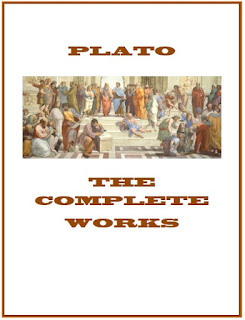
Plato the complete works
Plato the complete works Compiled by Dr Mohamed Elwany, Translated by Benjamin Jowett
you can read here
Sunday, June 25, 2017
Byzantine Pilgrimage Art by Gary Vikan
Brynmawr.edu had given a very thorough review, ranging from introducing the author of Gary Vikan to review per chapter, they reviewed that "Vikan's book is lavishly produced, especially the beautiful illustrations. The update and expansion of his 1982 essay is very welcome and will serve as a first orientation for all those studying the Byzantine pilgrimage as represented by various types of artefacts. The book is a good read for everybody interested in the Byzantine period; it will certainly attract more attention to the fascinating world of belief, ritual, and life in Byzantine times. Technical terms and Greek words (always given in Latin script) are explained or translated into English. Scholars will find most helpful the depth and accuracy of the information provided so that they can rely on this overall depiction of “Early Byzantine Pilgrimage Art” and use it as a starting point for their own special studies. It must not be forgotten that Vikan himself has published a large number of such specialized treatments of topics and objects a selection of which can be found in his bibliography, to which the specialist is referred for more in-depth information."
here you can check!
Subscribe to:
Posts (Atom)